
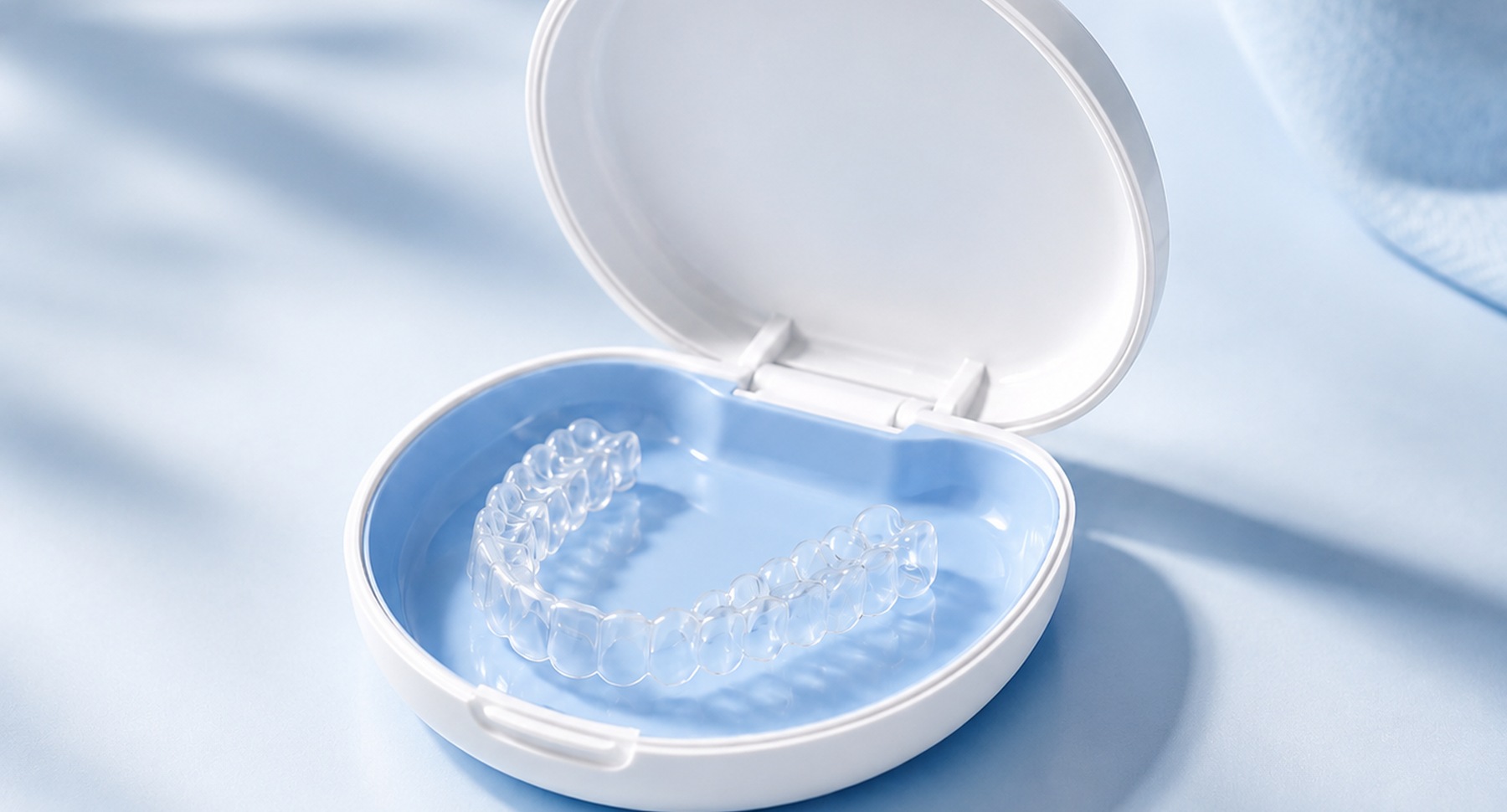
A simple daily cleaning routine
Rinse your retainer with cool or lukewarm water after you remove it. Use a soft-bristled toothbrush reserved for the appliance and a small amount of mild, non-abrasive soap. Brush all surfaces gently, including grooves where plaque and debris can collect.
Rinse thoroughly before placing the retainer back in your mouth or storing it in its case.
- Wash your hands before handling the appliance.
- Use cool or lukewarm water—not hot water.
- Brush gently rather than scrubbing aggressively.
- Allow the case to air-dry after cleaning.
What to avoid
Clear dental materials can be damaged by heat, harsh chemicals, and abrasive cleaners. Avoid methods that can scratch, warp, discolor, or weaken your retainer.
- Do not use boiling or very hot water.
- Avoid abrasive toothpaste unless your provider specifically recommends it.
- Do not place the appliance in a dishwasher or washing machine.
- Avoid bleach, alcohol-based cleaners, or strong household chemicals unless specifically directed by your dental provider.
When a deeper clean may help
If your retainer develops buildup or odor despite daily care, use only a cleaner labeled for dental appliances and follow its directions. Rinse the appliance thoroughly afterward. If buildup does not come off, contact your dental provider or ISO Metrik Dental Labs for guidance instead of using stronger chemicals.
Storage matters too
Keep your retainer in a ventilated protective case whenever it is not in your mouth. Avoid wrapping it in a napkin or leaving it near heat, pets, or direct sunlight. A clean case helps prevent re-contaminating a freshly cleaned retainer.
Know when to ask for help
Contact your provider if the retainer becomes cracked, sharp, distorted, unusually loose, or uncomfortable. Do not force a retainer that no longer seats normally. Fit changes may need professional review.
Questions about your appliance?
Our support team can help with care, orders, impressions, and next steps.